June 5, 2026
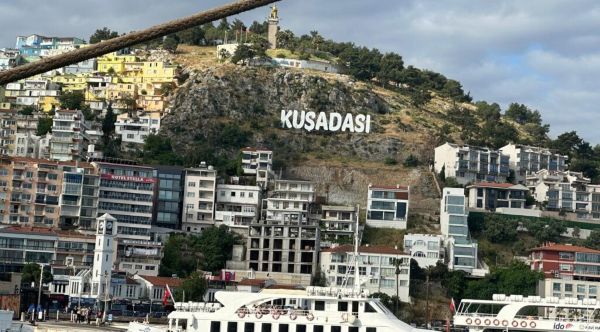
After visiting the city, we boarded the cruise and sailed to Kusadasi, a place known as Ionia in the ancient period. The place has multiple significance. Mother Mary – the mother of Jesus – spent her last days here. On the mountain, there was a bronze statue of the mother, and there is also a church dedicated to her. We visited the Biblical city of Ephesus, excavated sometime towards the end of the 19th century. I did not know earlier that the excavated city has such significance. The city is a witness to many Roman architectures – there were temples, houses for the common people, public baths, and marketplaces. The mosaic in front of the marketplaces built in the ancient period are still intact. The value of a shop increased with the more beautiful the mosaic in front of the store. It is a kind of modern premium outlet by well-known brands. In those days the soldiers were paid in kind, in goods, and for example, they were paid in salt (in Roman ‘salary’). The modern English word salary, or payment, came from this tradition. Many words, now used in English, are Roman in origin.
As we walked around, one major attraction was Hercules gate on the main road. On one side of the gate the Greek mythological hero was holding it, making a connection between the Romans and the Greeks apparent, and those days the people were passing through this gate. Looking at this city of Ephesus, one could imagine and envision how the ancient people in this city, still being excavated, were running their daily lives, worshiping Gods in the temples, going to marketplaces, and debating in the public forums.
Another attraction was the statute of the Goddess Artemis lying on the ground. The Goddess of fertility had an interesting place and story around her in the mythology. The protrusions in her body told a story – which I think is a stretch of human imagination – that how the Roman Goddess had to go through multiple processes to bring fertility. (This story also reminded me of the recent lunar mission Artemis, launched by NASA. But this mission was inspired by the Greek Goddess of the moon with the same name). On another structure, I could see the statue of Medusa carved. Medusa was cursed by Athena as she was seduced by Poseidon. A grave injustice to my mind, and a reflection of patriarchy even in those days, as she was punished without her fault. Medusa remained cursed throughout her life, and she could not fulfill her desired wish to be at the service of the Greek Goddess, for which one must be a virgin.
There was another triangular structure that caught my attention. It was the Nike, a statue in which a beautiful woman with wings was flying, and there were other symbols which I do not remember exactly. The tourist guide told us that the modern Nike brand of shoes was inspired by this statue as the triangular shape – which looked like a tick mark– inspired the brand. As I mentioned earlier, Nike stood for victory. Hence the modern ‘just do it’ is a kind of rebranding of victory.
As I walked down the city, I saw a tall structure – a library of the Roman times. It was a huge structure, and it also showed how Romans loved knowledge – how they studied, wrote, and produced works of literature. Though perhaps – I may be wrong – the ancient Romans were not as prolific as the ancient Greeks in producing works of art, literature and philosophy, one could think of Publius, Cicero and some others as exceptions, but this library certainly caught my attention. One could feel an air of grandeur. I was trying to feel the Roman spirit – not of the victor type, but of the type of calm reflection and deep cultivation – and I felt I could succeed a little bit.
I could see vast spaces but completely ruined. One could see only small stones. They were marketplaces of the Roman era and were older than the library and other structures we visited. It was a big marketplace, Agora, where hundreds of commerce took place every day. The sea was there close to the market, though now it has receded a few miles. Ephesus was a major center of interstate, or rather inter-kingdom, trade. Goods from Persia and other places came here and were traded. Those days there were no modern means of communication or interaction (no social media for sure!); hence the marketplace was perhaps the most important place where people communicated. From this communication point of view, the place holds an important place in Christianity. It is this place where St. Paul preached Christianity and preached against statue worship, even though against popular resentment. St. Paul stayed in this place for a relatively longer time. For his then radical views, radical to the people of the place, he was imprisoned. Later St. Timothy promoted Christianity in the region.
As we walked further down, the guide informed us that the place was famous for the romance between the Roman general Mark Anthony and Egyptian queen Cleopatra. I read about their affairs, and about the affairs between the Emperor Julius Caesar and the Egyptian Queen (they had an offspring which the Roman scholar and statesman Cicero had mocked as ‘that Caesar’). The place, as one can see, is layered with stories – whether stories about commerce, religion, valor, knowledge, education, exchange of values and ideas, and of violence. But the story of romance was certainly intriguing, but perhaps not that intriguing as some of the Roman emperors and generals were famous, or rather infamous, for such stories. As we walked further, we saw a huge open-air theatre. It has been revived by the Turkish government and is being made operational for public events. We visited some shops and stores and then came back to our ship.