
August 30, 2026
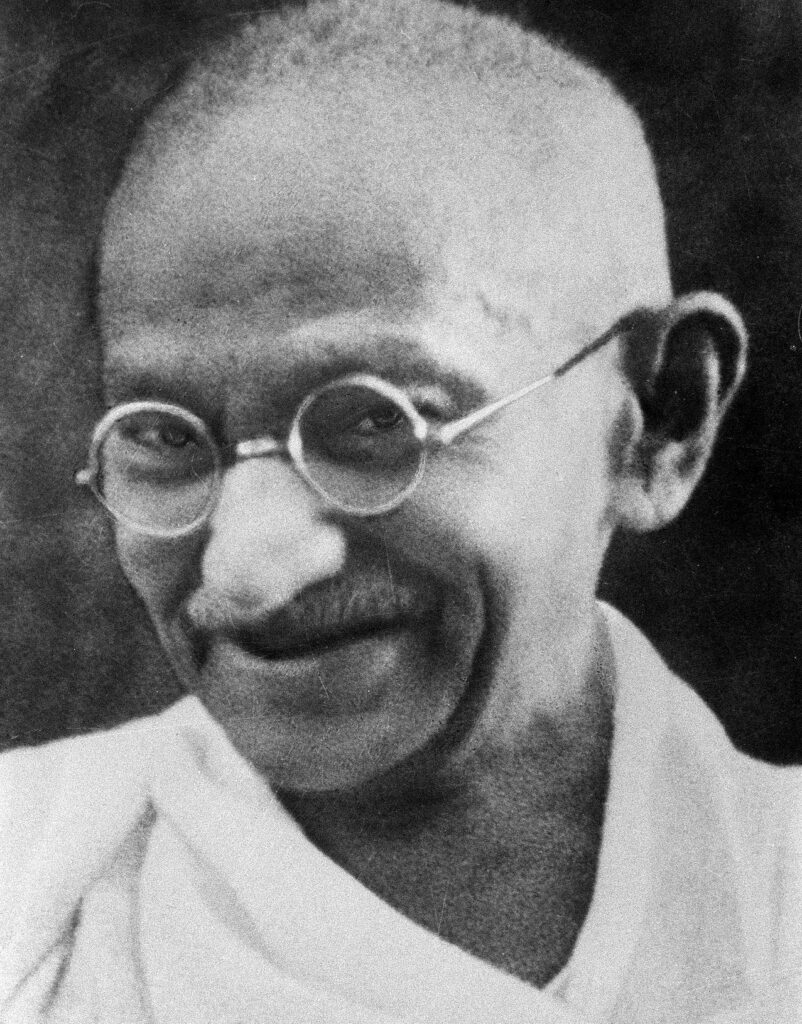
Few imagined that a movement generated on social media would gain global attention. Even fewer, perhaps, imagined that this movement of disparate youth would result in concrete action. Thousands of young activists gathered in the Indian capital and protested to reform the Indian education system, succeeding in fulfilling many of their demands. Importantly, they invoked Gandhi and launched the movement peacefully by following Gandhian methods such as fasting, peaceful marches, and similar nonviolent tactics.
The origin of the movement can be traced to a casual remark by India’s Supreme Court Chief Justice, who remarked on May 15, “There are youngsters like cockroaches, who don’t get any employment and don’t have a place in a profession. Some of them become media persons, some become RTI activists, and they start attacking everyone.” Abhijeet Dipke, a student who completed his master’s degree in journalism at a U.S. university, responded to this remark on X: “What if all cockroaches come together?” What started as satire soon became a viral sensation on social media, and within a few hours the Cockroach Janata Party (CJP), a platform launched by Dipke, was followed by millions. Millions of Gen Z youth came together and sought reform in the Indian education system.
The Indian education system is marred by corruption, as illustrated by recent high-profile cases of examination paper leaks. While the initial years of Indian independence saw a relatively transparent system, as the Indian founders were imbued with the vision of freedom and democracy, corruption slowly affected the system. As a result, hardworking students and their dreams were compromised because of corrupt practices. Corruption was almost the norm and accepted by the political leaders. Prime Minister Indira Gandhi’s oft-quoted quip in the early 1980s that corruption is a “global phenomenon” and her son and successor Rajiv Gandhi’s remark that only 15 paisa out of one rupee (equivalent to 15 cents out of one dollar) reaches the needy were well known. The corrupt system became further entrenched in recent years despite the promises of Prime Minister Narendra Modi’s government since it came to power in 2014.
But there was a key difference between the 21st century politics and earlier eras: the power of social media. While the majority of the mainstream Indian media are supportive of the government, social media, particularly Facebook, Instagram, and WhatsApp, are not under government control. That allows diverse voices, including those of protest and opposition, to come to the surface. Social media has been a great leveler, where everyone can play a role in raising their voices against the corrupt system. Citizen journalism, advocacy, and protests appeared to take shape more frequently on social media. While social media remains a value neutral platform, it has been used both for social cohesion and community belonging and also for communal hatred and violence. In India, while the Modi government used social media extensively to publicize its policies, the opposition and dissenting citizens used it to raise their voices. More importantly, particularly in the case of the ‘cockroaches’, the movement rapidly amplified and took concrete shape on the streets of Delhi and across India.
CJP launched peaceful protests at New Delhi’s Jantar Mantar in June, in which thousands of young people from Delhi and across India joined. Peace activist Sonam Wangchuk joined the protest and launched an indefinite fast to ensure that the demands of the young protesters were taken seriously by the Modi government. CJP then launched a march to the Indian Parliament on July 20, which was met with government force in the form of lathi charges, tear gas, and pellet guns, injuring protesters. The international media widely covered the government’s suppression of the protests. But ultimately, the government accepted the demands of the protesters, and India’s education minister resigned. The resignation had previously seemed almost impossible, and another minister in the Modi government had declared that there was no such thing as resignation in the Modi government, which rarely conceded to mass pressure. CJP pushed for broader accountability beyond the resignation, demanding that the families of youth who committed suicide due to paper leaks be compensated by the government, and that all police cases against participating youth be withdrawn.
Undoubtedly, the protests humbled the Modi government, which, after being in power for more than a decade, had created a sense of invincibility. The government appointed a committee to reform the Indian education system, including launching fast-track courts to address student grievances, imposing stricter punishment for those engaged in paper leaks, and implementing other measures.
How could a disparate group of youth extract such concessions from the Modi government? One answer is the power of nonviolence, so dearly espoused by another Indian, who humbled the British government during the Indian freedom struggle, Mahatma Gandhi. One could also count other factors such as increasing unemployment and rising cost of living and the use of social media by the youth to raise their voice against the government contributing to the success of the ‘cockroaches’ movement. The youth, including their leadership, firmly committed themselves to peaceful protest. The success of the protests brought to the fore the power of Gandhian nonviolence. Dipke, while addressing protesters, said, “…we have Mahatma Gandhi, from whom the world takes inspiration to protest.” The success of the peaceful protests reminds me of my interaction with James Lawson, the Gandhian scholar and strategist who played a key role in the American civil rights movement, during an academic event in 2019. Lawson told me that people are yet to fathom the power of nonviolence, which can work miracles. The youth protests in India achieved nothing short of a miracle: they humbled the government and forced it to reform the education system.
The article was published earlier on Peace, Democracy and Development blogsite, on August 12, 2026: https://blogs.umb.edu/paxblog/2026/08/12/cockroaches-movement-in-india-follow-the-gandhian-path-for-education-reforms/